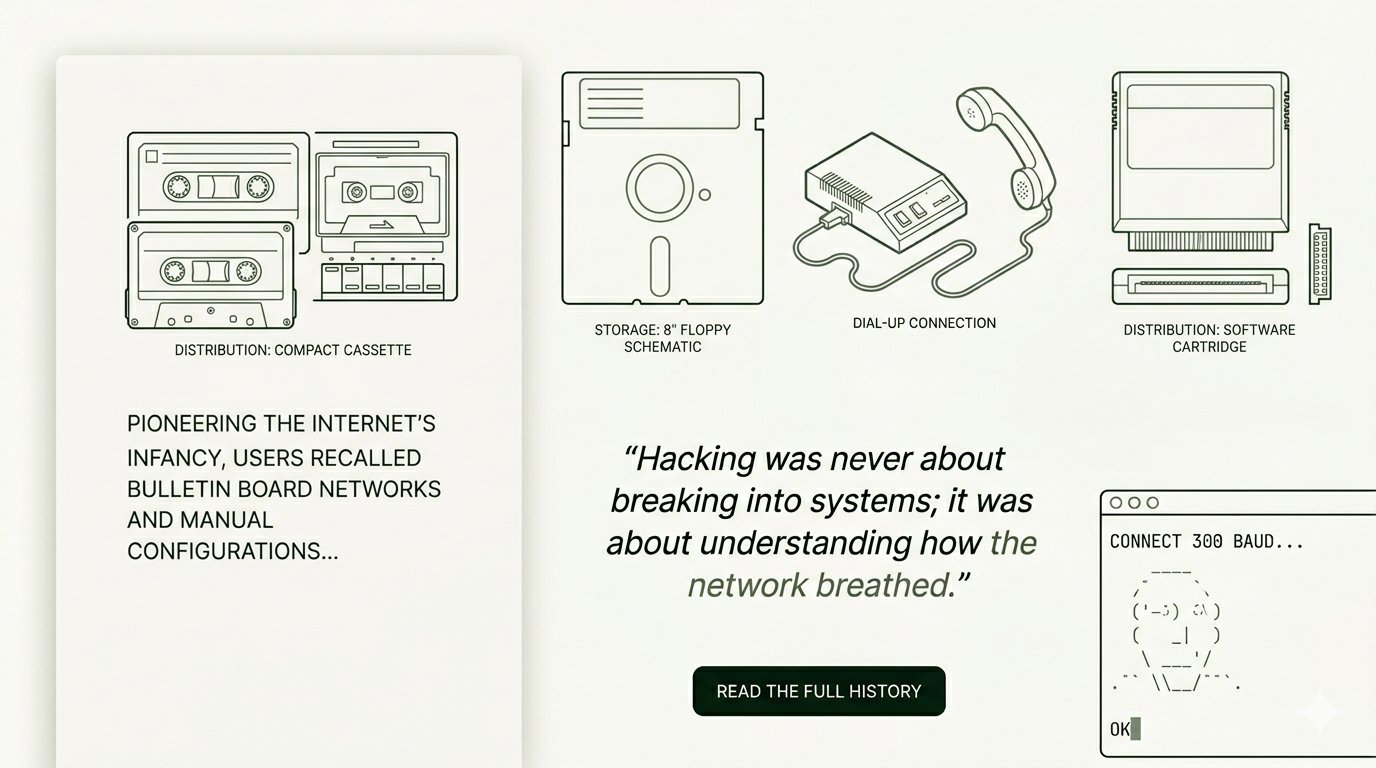
There is a paradox at the heart of digital preservation. Every format we use to save the present is already becoming obsolete. The floppy disks of 1984 are unreadable today; the Flash animations of 2004 are ghosts on a broken stage. Dr. Aris Thorne has spent thirty years thinking about this problem.
The Ethics of Exclusion
"Every archive is also an act of forgetting," Thorne says, settling into a chair surrounded by hard drives and printed manifests. "When we decide what is worth preserving, we are simultaneously deciding what is allowed to vanish. That is a profound ethical responsibility."
"Data is not information, information is not knowledge, knowledge is not wisdom."
His work at the British Library pioneered the concept of "intentional decay"—the idea that some digital artifacts should be allowed to degrade gracefully, rather than being frozen in a state of perpetual artificiality.
The Living Archive
The future of archiving, according to Thorne, is not storage—it is annotation. "The document without its context is a body without a soul," he concludes. "We must preserve not just the artifact but the conditions of its creation."